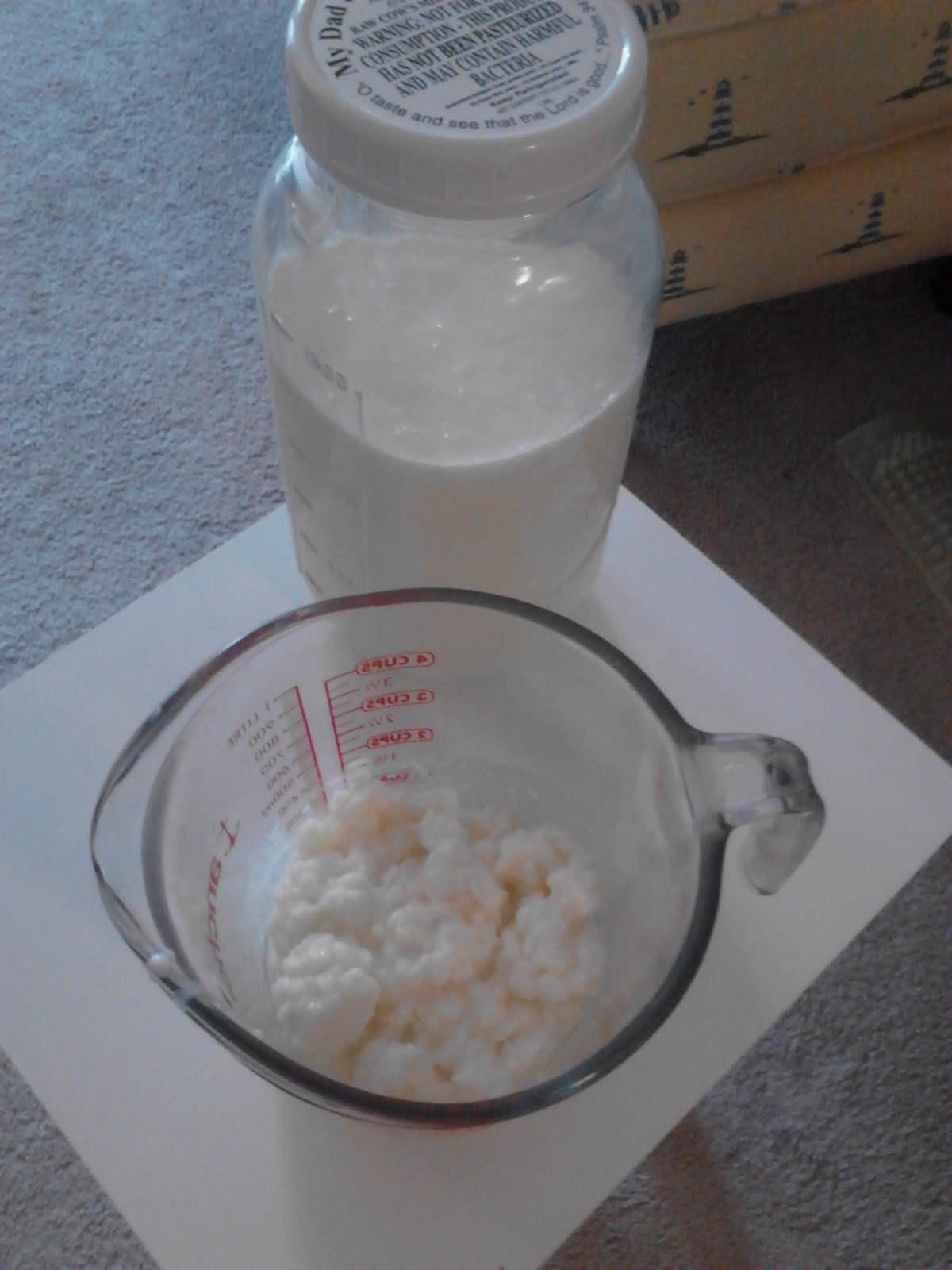
Monday, April 8, 2013

Order Water Kefir Grains

*I will be out of the Country until mid August so I will not be able to ship out any grains until I return.*

Click HERE to visit Kefir 101
My blog dedicated to water kefir


Real Water Kefir Grains

What is Water Kefir?
Simply put, water kefir is a fermented probiotic beverage.
The exact details of its makeup can be found HERE.

Similar to milk kefir, water kefir thrives on sugar.  There are 2 distinct difference between them however. The first is that water kefir likes sugar cane and milk kefir likes milk sugars.  In addition, water kefir is clear and translucent, crumbling easily; while milk kefir is white and rubbery in form and very tough.

What is a Probiotic?
If you are reading this blog then you are most likely interested in the Probiotic effects of water kefir and water kefir grains.  According to Wikipedia, "Probiotics are live microorganisms that may confer a health benefit on the host."

Ok, so what exactly does this mean?
It means that the microorganisms that are created by the consumption of sugar water which has a fizzy taste similar to soda can make their way into your digestive tract to help you to digest and assimilate not only more nutrients but also more trace minerals.  On top of that they like to increase your killer cells which take out bad bacteria living inside of you.

How hard is water kefir to grow and care for?
For the benefits you will get from consuming the water kefir and the grains themselves, the amount of time and resources dedicated to their care is negligible.  You can make a new batch of water kefir every other day in about 5-10 minutes time for very cheap depending on your sugar sources.  This includes creating the first and secondary fermentation jars.

I personally have a 3 stage fermentation process that goes like this:
Stage one - Water, sugar, sea salt, baking soda, black strap molasses and water kefir grains sit for 48 hours. (Sugar and water are the only ingredients needed if water is of good mineral content).

Stage two - Strained water kefir goes into second jar with tight lid with additional sugars in the form of cheap juices, wet or dried fruits or simply a little more sugar where it will sit for an additional 48 hours.

Stage three - Second jar is bottled into tight flip top bottles for increased carbonation and to further digest out any remaining sugars for another 48 hours.  This is then consumed between days 5-6 and finished before next batch is then bottled and process repeated.

Ok, so the process is simple but how much does it cost to make?
Good question, and it really all depends on your personal preference.  On the cheapest end of the scale assuming you have well water with minerals in it you can buy white sugar in bulk and grow the grains indefinitely off that alone.  Which is very cheap to do indeed.  Making 4 cups every 2 days you would only go through 1/4 cup of sugar. (DO NOT USE HONEY as honey is antibacterial and antimicrobial and will eventually kill your grains)

Increasing the mineral content a bit for very cheap, you can continue to use the white sugar but add some extra trace minerals for your grains to use.  This would entail a small pinch of sea salt and a small pinch of baking soda to your sugar water.

Taking this a bit further, you may also choose to include some organic black strap molasses which will last you a very very long time.  Its simple to dip the end of a knife into the molasses bottle and stir the warm sugar water dissolving both the sugar and the molasses into the mixture.  Again you only need about 1/8th to 1/4 of a teaspoon for 4 cups or water kefir.

Increasing the trace mineral content even further, you may decide to use some unrefined organic sugar cane to take up a portion for the sugar.  And if you decide you can eliminate the white refined sugar all together and simply use a more expensive less processed sugar cane with the above additions OR pure Maple Syrup plus a little molasses.

All in all, for the amount of probiotic kefir water and grains you will get you can not compare this to any other probiotic on the market today.  Nothing simply compares to the speed and amount you get for how cheap this is to make.

So its cheap to make and takes very little time, what tools will I need?
So by now you should understand that making water kefir is a very simple process.  The grains simply need sugar water and somewhere to ferment.  What other tools will you need to make the kefir grains?  Lets take a look.

1)  A glass jar with a tight lid or a coffee filter and rubber band (I use a pickling jar that holds about 8 cups of water with an airlock)  this will be for your first fermentation (The ferment that contains only sugar water and kefir grains).

2)  A second glass jar OR glass bottles with flip top stoppers.  This is used to flavor the strained kefir water from the first jar and allowed to sit for secondary fermentation.
3)  Flip top stopper bottles for 3rd fermentation if using another jar for second ferment.  

4)  A plastic or stainless steel strainer, and a plastic bowl for straining the kefir liquid into.  The only other thing you will need would be a spoon for the kefir, a 1/4 measuring cup and / or a set of measuring spoons.  and that's it!

I have all of these tools and access to sugar, what about water?
Ahhh, the most important part for successful water kefir growth...The water source
The best water sources would be well or spring water.  This is because these don't usually contain large amounts of chlorine etc. which can be found in most city water sources.  Well water is also very rich in trace minerals which the grains will love and thrive off of.  So if you have well water you are all set.

What if you don't have well water?
Then you will have to take a few precautions.  First of all you will want to boil your water before each batch which will help to remove most of the chlorine etc.  Then you will want to make sure you add a pinch of sea salt and a pinch of baking soda (sodium bicarbonate) to each batch along with some organic black strap molasses.  A 1/4 egg shell is also an option if grains wont grow.  

That being said, your grains may still not thrive if your water is bad.  but they will still work and ferment your drinks just fine.  If they don't grow, you can try mineral water from a store.  

Can I use plastic instead of glass for my jars?
No, stick with glass.  These drinks and the microorganisms within them are strong and the acids can cause plastic to leech into your batches which is not something you want to be consuming.  So stick to glass and you should be just fine.

How long will the grains make kefir for?
FOREVER! :)
Unlike the powder, these are real LIVE water kefir grains, which will last indefinitely if cared for properly.  You can have your own home made probiotics for the rest of your live and pass these onto your friends and family forever. 

Can I flavor the kefir WITH the grains? 
Sure you could, but you might kill them or slow down their growth if you use the wrong things (Lemon etc.)  Its best the leave the grains to ferment the sugar water with only the above mentioned additions.  If you want to add juices and fruits to your water kefir, do it in the secondary fermentation jars where the grain have been removed.  Always keep the first ferment with the grains simple to ensure they live a long healthy life.

So I flavor the kefir after I strain the grains?
Exactly!
Once you have strained the water kefir and separated out the grains you should only have a liquid now.  This liquid should have fermented with the grain for 48 hours.  Now you can add your juices or fruits and ferment them for another 2-6 days.  Just make sure to burp your corked bottles regularly to make sure they don't explode from over carbonation!

Sounds easy enough, where do I get the grains to get started?
If you would like to order live water kefir grains to use and share with your friends and family I can send them to you in the mail.  All you need to do is select the quantity of grains you would like to receive from the drop down menu on the top right of my blog where it says BUY NOW.  

Ok so I just purchased the grains, how long will shipping take?
Once payment is received, I will package your grains during my next batch change.  This is done every other day.  So at most, your grains would take 4 full days to be packaged and placed in the refrigerator to slow down the fermentation within them for shipping.  Then the grains will be sent out within 1-2 days after that.  I ship Standard shipping with USPS which can be 5-8 days.  I only ship withing the US.

My grains have just arrived in the mail now what do I do?
If you cant get to them right away, I would suggest placing them in the refrigerator until you are ready to start using them.  The sooner you can get them into some fresh sugar water though, the better.

Start by dissolving your sugar into hot water, one cup usually works fine.  Then add in cold water until you have the appropriate amount.  4 cups for 4 tablespoons of grains.  Then once the water is at room temperature, simply add your grains directly from the packaging into the sugar water and tighten the lid or add your air lock (You may also use a coffee filter and rubber band).  Leave for a full 48 hours out of direct sunlight.  (Grains don't like light)

Remember that your first batch of water kefir will be thrown away so you can use plain white sugar to start with.  

What if I have more questions?
Simply post your questions below if you would like and I will answer them for everyone to see.  Or I will add your question to a general faq page where I will answer it there.  You can also email me directly at zenkefir@gmail.com

I will try to help you directly through my mail or follow up here on my blog for you.  My goal is to make this as easy for people as possible as I know what great benefit kefir is to your digestive tract and overall health.

Enjoy these wonderful little miracles!

Jeremy


What You Will Receive

Each order contains (4 tbsp) or (1/4 cup) of LIVE water kefir grains.

Each order will be shipped in a (4" x 7.5" Kraft Bubble Mailer Envelope) and shipped through USPS.

Inside of the envelope will be (2) zip lock plastic baggies, one inside of the other.

The innermost zip lock bag with contain the Live Water Kefir Grains

I ONLY ship within the USA*

You will receive Live Water Kefir Grains directly from batches I am using in continuous production.

What To Do Once You Receive The Grains

Once the grains arrive in the mail, they will be hungry for fresh sugar and minerals. I prefer to use both a primary and a secondary fermentation (And I even extend the secondary fermentation into a 3rd for a total of 6 fermentation days. Here is what you will want to do for best results.

Days 1 - 2

1) Prepare a clean & DRY glass jar (Canning jars with seal-able lid or air-lock lid recommended)

2) Place fine strainer over bowl.  Open plastic bag containing water kefir grains.  Fill bag partially with fresh water.  Pour contents into strainer.  Repeat until all grains are out of original bag that contents were shipped in.

3) The grains may look or smell off temporarily from the shipment process (So don't be alarmed!) Dissolve 1/4 cup sugar in hot well water then add 3 cups cool water for a total of 4 cups. Let cool at room temperature. (Additional things you can add would be a pinch or sea salt, a pinch or baking soda and a 1/2 teaspoon of organic black strap molasses.) (DO NOT USE HONEY as honey is antibacterial and will slowly kill your grains)  Scoop water kefir grains into jar and tighten with lid.

4) Let jar sit for 2 full days (48 hours)  You may agitate jar after 24 hours to allow any remaining sugar to be dispersed for grains to consume if desired.  Not necessary to shake contents at all however unlike milk kefir.

Note:  After 2 days inside the jar, the water kefir should appear lighter in color and should have carbon dioxide bubbles now floating on the surface. The water kefir grains may also be floating on the surface if the water and sugar used was of good quality. This means that the grains grew so fast that they encapsulated carbon dioxide inside of them. After 2 days of fermentation it is time to move on to step number 2.

Days 4 - 6 And After...

1) Once the grains have fermented in 4 cups of sugar water for 2 days, it's finally time to strain them. Please use a fine mesh strainer to catch as many of the grain as possible. Start by placing a large bowl under the strainer. Take the water kefir and shake the contents thoroughly to help mix it up. Dump the contents into the strainer until only the grains remain.

2) There should be plenty of grains now remaining on the strainer to use in the next batch. If your water and mineral quality was good the grains may have doubled by now. If your strainer was too large and grains went through it, use a smaller strainer and repeat the process (Importance of the bowl).

3) If all of the grains remained in the strainer, give them a good rinse under cool water.  Clean jar in sink with hot water (Soap not needed!) Discard firth batch of water kefir but save ALL grains.

4) Make batch 2.  If your grains have doubled, please apply the following recommended amounts of (Grains:Sugar:Water)
Grains - 1/4-1/2 cup
Sugar - 1/4 cup
Water - 4 cups

Grains - 1/2-1 cup
Sugar - 1/2 cup
Water - 7-8 cups

I personally use a mason jar with about 7 cups of water, 1/2 cup sugar and 1 cup of grains for each batch.  This works out great and I consume the extra grains made every 2 days in a shake.

5) If the original batch grew enough in the first 2 days to completely ferment the initial 4 cups of sugar water with effervescence, the second batch should be fine to consume after secondary fermentation.

6) After the second batch has sat for 48 hours, strain the contents like before. This time, place the strained kefir into a new glass jar (Air lock is best to refine the taste and texture), or tighten a lid and allow to sit for another 48 hours. This batch should include the addition of sugary juices or dried fruits to give extra sugar for secondary fermentation.

7) You should now have 2 jars in production. The first jar containing the grains and fresh sugar water every 2 days. And the second jar containing the strained kefir which sits ferments under airlock with addition of extra sugar, juice or fruit for 2 more days.

8) Every 2 days, consume the secondary fermentation kefir (From the airlock jar) and add new sugar water to the first batch (With the grains). That's it! Once you have done it once or twice it will be so simple you wont even have to think about it.

Tips

1) Take it slow...Water kefir is alkinalizing, so try not to mix it with foods that require a highly acidic environment to digest them.  Listen to your body and consult your physical before consuming to make sure you are healthy enough.  Although I have not been able to find any negative effects from drinking water kefir, moderation is also a good practice with anything.

2) Start consuming only 1 cup 4-5 days a week. When you consume kefir for the first time, you may experience some cramping as it works its was through your body. This is powerful stuff and should be taken before bed or first thing in the morning for best results starting out. Every 2 days, you may have new water kefir grains (Extras) which are very good to make into a shake.  I like to use a banana, water and whey protein to consume them. Possible temporary lack of bowel movements for the next 18-24 hours if consuming large amount of the grains before bed.  I have personally noticed this with the grains themselves but very thorough digestion has always taken place even with food I am normally sensitive to.

3) I tend to rinse my jars out every batch of kefir I make (Less so for milk kefir (Only once a week) but every new batch (2 days) for water kefir. I also give my grains a quick rinse with fresh water before starting a new batch. This helps to eliminate any strong yeasty smells and tastes when consuming the extra grains.

4) If you want to try a kefir infusion (Adding something the the batch to increase is vitamin / mineral content through the process of microbial fermentation...NEVER add these items to the batch containing the live kefir grains themselves! Only ever use sugar water with them. The secondary (Strained) kefir is where you add things like crystallized, sliced fruit, juice and the like for the second 48 hours or more.


Good Luck and have fun with the stuff!

Don't fret about messing it up, this stuff is incredibly tough as long as you have good water and don't use honey or other things WITH the kefir grains, keep it simple...

Experiment and try to stick to a fairly consistent usage, again I find 4-5 days a week to be perfect. More on occasion. This allows you to consume a longer fermented beverage a few days a week.


Email me if you have any questions!
zenkefir@gmail.com


Cheers!

Jeremy

Monday, April 1, 2013

Welcome (From milk kefir to water kefir)

CLICK HERE to go to my new Water Kefir Blog

Hello Everyone!

I hope you are all having a wonderful 2013 so far :)
I thought I would give you all a few updates before I start blogging again.
For starters I have moved out of GA and no longer have access to Raw Organic Whole Milk :(  Because of this I have basically eliminated milk from my diet.

Sure I could have continued to buy milk from the store and ferment it to drink but sometimes you just have to listen to your body.

I can still sit down and kill a gallon of milk in a day but the pangs and lack of sleep thereafter have a pretty strong deterring effect on me, so instead I have chosen to back off the milk for the time being.

So now my new focus is Water Kefir

I am currently offering water kefir for sale before I head to Europe mid May 2013.
I am going to be creating several blogs on what water kefir is, where it comes from, how it differs from milk kefir and kombucha and why I am interested in culturing it.

I have been drinking water kefir for the last year and a half and can tell you that your water makes a huge difference in how it will ultimately grow.  So stay tuned and soon I will be giving you all some very detailed information on how to and why to culture your own water kefir.  As well as an option to order it on here directly from me.

If you are interested in ordering Live Water Kefir Grains from me, you can either order it from this blog on the upper right or from Kefir 101 by clicking HERE.

Stay tuned for new posts and updates!

Jeremy

Monday, May 14, 2012

Organic Raw Cows Milk

Organic Raw Cows Milk

This is my current choice of milk for making kefir with.
This choice is something I tried to avoid, mostly because I thought I could get the same benefits and save a lot of money buying store bought.  I currently pay $10 per gallon for Organic raw milk.  For a gallon of Raw I could afford almost 3 gallons of store bought.

Why not just save the money and buy store bought?
Simple...Gluten allergy

 If I had to pull a number out of my ass on the efficiency of store bought milk to make kefir with in preventing headaches and other common side effects associated with gluten sensitivity...Id say around 20-30% when compared to Raw milk kefir.

Simply drinking raw milk seems to help lessen negative related side effects like inflammation and headaches for me.  But raw milk kefir is amazing in preventing these things from occurring at all...IF I drink it a few times a week.

Ive noticed that the ideal consumption for gluten allergy suppression or prevention is 6 nights a week (1-2 cups of milk kefir).  You can get away with 4-5 nights a week as long as some of the kefir is still undergoing longer fermentation times while you are not drinking it.

Once you have done this for a while, its takes a strong hold on your system and will last for 10-12 days if you stop cold turkey and start eating gluten and sugar like an animal...Accidental experimentation.

Random Facts

Raw Milk contains 8 essential amino acids
Contains 80% casein and 20% whey
Antiviral, anti cancer and iron binding effects from lactoferrin, antibiotic effects from lysozymes and lactoperoxidase
Raw milk used as medicine early part of last century
You could live on raw grass fed cows milk exclusively if nothing else was available

Nutrition

Raw milk contains lactose-digesting Lactobacilli bacteria which helps to digest the lactose for you.  Good for those who cant usually drink traditional store bought milk.  This creates lactic acid.  Lactic acid allows for more calcium, iron and phosphorus absorption and makes the proteins more digestible.

Contains CLA's (conjugated linoleic acid) in 3-5 times that of feed lot cows.
With does this stuff do?
Well its known to increase muscle growth, eat away abdominal fat, raise metabolic rate, reduce insulin resistance, lower food allergy reactions and increases immune system response.

Sunday, January 29, 2012

Kefir Separation - Why Isn't My kefir Separating?

Proper Separation

Ok, so you're new to making kefir and you can't seem to get complete separation into curd and whey.  Or maybe you have been consuming kefir for a while now and for one reason or another it just doesn't seem to happen with the batches you make.

The image on the left shows 3 jars all within 24 hours of being placed in the jars for a secondary fermentation.  Not one jar on the left had been fermenting for more than 48 hours.  Unlike Goldilocks and the 3 Bears, you don't have to taste the kefir to know when it's ready.  It should be very clear to you and this is how you will know.

The jar on the far left is still in the process of fermenting.  It has only a little whey on the bottom and still looks very smooth in texture.  The middle jar is ready to go.  It has good separation and the curd is breaking apart and starting to rise on top.  You will see a lot of air pockets and a mound on the top when it's ready.  The jar on the right is a clear sign it's getting overly fermented.  This isn't necessarily a bad thing, and its good to consume this type of kefir once in a while.  But you will know its overly fermented, when the curd starts to fall back to the bottom and the whey is visible in the middle.

Getting Started Or Starting Over Correctly

In order to determine the exact reasons that your kefir may not be separating, we need to start from scratch.  I have been running 3 jars at once but decided to strain them all off and show you how to set up a proper jar.

Once I strained all 3 batches, I put the grains into a glass jar to measure from and poured the kefir into a single jar to begin the secondary fermentation.  Remember, all you need is 24 hours with the grains for primary fermentation and 12-24 hours without the grains for secondary fermentation.  Unlike Kombucha, which requires air for aerobic fermentation, Kefir likes a lid for anaerobic fermentation.  


How Many Grains Do I Need?

As you can see here I am currently working with about 2 1/2 cups of kefir grains.  This is a lot of grains for the amount of kefir I want to cut back to.  I decided that I will be consuming about 5 cups a day for a while.  Let see how we can determine how many grains we need...

A general rule of thumb is 1:5 - 1:10
This means that for 5 cups of kefir, we need 1/10th or 1/2 cup of grains minimum and shouldn't need more than 1 cup maximum.


Although the angle on here makes it look like there are more grains then there are, I put about 3/4 of a cup of grains into the jar.  Some of the grains are very large now and it's hard to be exact.

Luckily, this isn't an exact science, which is why it's so easy to make kefir :)
 This shows the strained kefir shortly after I put it all into one jar.  You can already see on the very bottom of the jar, where it's begun to separate out into whey.  The whey will always form on the bottom during secondary fermentation.

Things To Make Sure You Do

Before you strain your kefir from the jar with the grains, make sure to give it a very good shake with a circular motion.  This is very important, as it will both make the grains easier to strain and will make sure separation happens correctly in the second jar.
This is the same Jar in less than 24 hours under secondary fermentation.  Notice that it is in the Goldilocks zone?

This means that the curd clearly has visible air pockets and holes throughout and there is a large amount of whey on the bottom.  When you start to see the curds falling in layer on the bottom of the jar, its becoming quite strong.

When I strain my kefir from the grains, the Ph is usually in the green zone or about 4.0

Once you have given the kefir and grains a good shaking, strain them by skaing them back and forth again in a circular motion inside a plastic strainer.  Try not to use any utensils to push on the grains or to "help" get and excess junk off of them.  Let them be and you will notice a lot of improvement.

Once strained, pour the kefir into another jar and leave untouched at room temperature for a second day.  If you want separation to occur, do not refrigerate this batch at this point in time.  I never refrigerate any of mine. 

Now comes the important part...Shake the grains right back into the same jar WITHOUT washing it first.  Don't be afraid of white buildup inside the jars.  As a general rule of thumb, washing the jars ONCE per week is all you will ever need to do.  The more you sterilize with soap and water, the harder the bacteria have to work to do their job.  We want to make their job easier, so don't be a neat freak with this stuff...It doesn't like it.

These things are the biggest components...Limit the amount of contact you have with the grains, limit jar cleaning to ONCE a week, don't refrigerate, use a secondary fermentation and keep an eye on the growth of the grains.  Eat them like pills with a little water and juice when they grow too quickly.

Good Luck!

Wednesday, January 4, 2012

Celiac Disease And Kefir - Part 3

So what type of foods irritate me when I'm not consuming kefir?

Sadly...Just about everything.At the moment I have been 2 and 1/2 weeks without any kefir at all.  If I was smart, I would have mailed some to my family before I went to visit them for 2 weeks.  If I was even smarter, I would have eaten REAL foods while I was on vacation...But it's vacation. :)

So why am I writing 3 seemingly pointless blog posts on Celiac Disease without my usual scientific literature to go along with them?


Because I can't believe how poor my digestive system works without fermented foods.  As I have mentioned in a previous post, about 10 years ago I had a doctor experimenting on me when I came down with walking ammonia in college.  When it finally got unbearable, they put my on amoxicillin for 30 days straight at a very high dose as I spent the majority of the month laying in bed.   Some Christmas break...


Getting to the point...


I still can't get over the fact that I have been able to eat anything the past 8 months without thinking twice about it giving me blurry vision, or a headache.  Side effects I had gotten so used to that I had forgotten how to smile.  Before I got on Kefir, I thought I would have to live like a caveman the rest of my life and deal with not ever being able to eat out anywhere or enjoy a piece of pizza or dinner with friends.

So the reason for this long rant...

I have not been able to eat much of anything lately and I'm starving!  I even tried to have a veggie shake earlier and some eggs and nothing is staying down like it should.  My stomach is a mess without this stuff.  If you are dealing with any of the unpleasant side effects associated with food allergies, or have lost your stomach flora from antibiotics, please try this stuff!

Once my first batch is ready after being in the fridge for 2 weeks, (While I was gone), you can bet that this stuff isn't leaving my side again!  I cant imagine not having this stuff around and have no idea how I would be able to deal with a regular life without it.  Please!, if you are suffering from gluten allergies, please give this stuff a try!  I cant stress it enough.  Do a little research on lactose intolerance if you have it and start with a little kefir and you should be able to digest it without a problem.  Because it consumes all of the milk sugars and digests everything for you, so your body doesn't have to do much of anything at all.

Ok my rant is over...Next I will try to do a few posts on traveling with kefir.
I have done so while in a vehicle on an extended trip, but not yet by plane...

But I will keep you all updated on how to travel with this stuff for future reference!

Celiac Disease And Kefir - Part 2

So you take a store bough pro-biotic and don't care if it doesn't ever let you eat anything without having a bad reaction?

That's wonderful!...And I am glad you have found a "solution" to your problem.  How many living probiotics do you really think are in those dried out powdered pills anyways...And do you really think they can breed and grow inside of your body?  If you do, no need to read on.  Sometimes ignorance is bliss...And maybe for you mind over matter is actually doing something.


For those of you who might question the active live cultures present in the pills you pop in an effort to get rid of the digestive pain...your in luck.  Without going into the details of how limiting store bought probiotics are, I will simply jump ahead to another possible deterrent from using them.


Store bought probiotics...Are...Store Bought!
Which means, they are controlled and cost money...over...and...over...and...over again

Don't get me wrong, I think it's wonderful that there are entrepreneurs out there that can team up with scientists to help people with digestive problems created by other entrepreneurs and big businesses who have teamed up before them to scientifically engineer foods that gave us the digestive problems in the first place.

Here is what I am saying though.  NO STORE BOUGHT PROBIOTIC CAN COMPARE TO KEFIR.

And real Kefir is illegal to sell in the grocery store, because the government has a law that limits the number of different active cultures allowed in a given food or beverage.  It also cant ever be patented, as its impossible to recreated outside of using someone elses kefir grains to start a culture with.   IMPOSSIBLE, which means Kefir in the grocery store...Isn't Keifr.  Trust me, as I cant drink it without an allergic reaction.

So why would you want to save your expensive probiotics for your vacation time and drink only kefir while at home?

Well if for no other reason...Do it to save money!
Every time you take a store bought probiotic, you pay for that pill.  And for what you are getting, you pay dearly for that pill.

With Kefir, you buy it once and it lasts a lifetime, then you pass it on to your kids, and so on and so forth.

All you need to buy is milk!...Or if you prefer water kefir...Some cane sugar in bulk.

And thats it!

Celiac Disease And Kefir - Part 1

Celiac Disease (Nontropical sprue; Gluten intolerance; Gluten-sensitive enteropathy)Celiac disease is a condition that damages the lining of the small intestine and prevents it from absorbing parts of food that are important for staying healthy. The damage is due to a reaction to eating gluten, which is found in wheat, barley, rye, and possibly oats.   
http://www.ncbi.nlm.nih.gov/pubmedhealth/PMH0001280/

Not With Kefir :)
Ok, I'm not going to bore you with a long drawn out detailed description of the debilitating side effects associated with this wonderful disease...If you have it or anything close to it...I'm sure you know.

Here's what I am going to offer you though...A way out.

If you have taken any time to read through any of my extremely boring litany of bacterium definitions or any of the numerous descriptions on how kefir can help various ailments, you may be getting the point that there is actually something to this wonderfully rubbery substance.

Here's the deal... 

If you consume kefir and I'm talking about REAL KEFIR, not the fake sugar filled shit they try and sell you at the grocery store, you can fix more digestive issues than you could ever imagine.

Don't believe me?...

Here's what used to happen to me before I found kefir.   
 Before I found kefir, I suffered severe chronic inflammation that for several years I attributed to a bad car accident.  In reality, the accident simply made the inflammation so bad that I couldn't ignore it anymore.  I lived on Ibuprofen and suffered through migraines for years.  

About 2 years ago, I dropped 25 lbs and wasn't able to eat even a bite of pizza without developing blurry vision, confusion, dizziness, massive headaches and extreme fatigue.  I would have to go lay down as I couldn't keep my eyes open.  The symptoms would come on quickly and always the same.  Within 20 minutes of eating something containing gluten or some form of high fructose corn syrup, I was done for.

I went on a gluten free diet for about 8 months, eating mostly ketogenic.  In other words, I lived on a healthy version of the Atkins, you know...real meat.  (Not the crap they sell at the grocery store), but real home grown or hunted meats and organs meats.  I also consumed copious amount of fat for the majority of my calories.  I lived on coconut oil, butter, cheese, olive oil and fish oil.  

The pain was gone...

For the first time I realized that I may be just like the rest of my brothers and sisters...Gluten intolerant.   But on this diet, I found it almost impossible to eat anything I didn't make myself or keep any real weight on.  I would have dinner at someones house and think their homemade salad and dressing must be fine to consume...Only 20 minutes later to find out that there was corn syrup and sugar in the dressing...

Finally I discovered kefir...

And Yes, That obnoxiously large blue font was to stress the importance of that short blurb...And here's why...I recently forgot I have a gluten allergy at all.  In fact, I so forgot that I had any type of food allergy that during a 2 week Holiday vacation, I ate like an animal.  I ate anything and everything containing gluten, high fructose corn syrup and hydrogenated oils.  And guess what ha...For a full 10 days of gluttony...I was in heaven.  And I felt great to boot!

It wasn't until the 11th day without consuming any kefir and living off foods I should never have touched in the first place, that the once forgotten reactions came back.  So for the last several days, I have had to again limit everything I ate to gluten free and read labels to make sure that wasn't any fake corn syrup.  Somehow I seemed to still consume it and I have suffered through the pains waiting to get back home.

Friday, April 15, 2011

Start Fasting (Choose A Method)

So hopefully by now, you are aware of the amazing benefits associated with periodic fasting.  Today well take a quick look at various ways to go about your fasts that will work for any ones schedule.  Why will it work for any ones schedule?  Simple, there aren't any rules!

To make things simple for you though and to give you some basic ground rules from which to build your fasting regime from, lets begin with a foundation.  In order to have a stable method for either losing weight, maintaining a healthy weight, teaching your cells to become efficient protein users or simply extending your life span, you MUST have a general guide as a foundation.

Even if your foundation is to be sporadic with your fasting, plan how long you will fast for within a given period of time and then you can be sporadic and fast whenever you feel like it.  If you don't at least block out a time (Say once every 3 months) for a week long for or even a 3 day fast, it may never get done.

So here's the foundation that I use.  Feel free to use this for yourself, or modify it all you want to. 

Here goes...
There are 52 weeks in a year.  There are 4 seasons in a year.  This is simple math, so no need to reinvent the wheel here.  Lets start with dividing 52 by 4.  This will give us 13.
We take this 13 week period and call it a block.  We will complete 4 blocks in a year.  If as I mentioned above you like to be sporadic with fasting, you now have 4 - 13 week blocks in which to "randomly"  fast a given number of days.

Here's a better idea...Or should I say several.
Lets start with a schedule for BUSY BODIES.  Those working long hours and potentially with high stress and or high physical labour jobs.  These people cant afford to fast more than 60 days a year and if your always working, you cant afford not to eat for more than say 24-36 hours per week or it may interfere with your work performance.
This fasting method is for you:

52 Days of Fasting (Best for underweight, skinny people with busy, stressful, physical labor jobs)
Tips:  You don't have to fast the same day every week.  Allow yourself to be free with this fasting method, but make sure you do it once every single week!  A trick is to start a fast at say 3pm on one day and break it at 3pm the following day.  If you try to do 12pm-12pm, you may end up fasting 36 or more hours.
Week 1 - 24 hour fast
Week 2 - 24 hour fast
Week 3 - 24 hour fast
Week 4 - 24 hour fast
Week 5 - 24 hour fast
Week 6 - 24 hour fast
Week 7 - 24 hour fast
Week 8 - 24 hour fast
Week 9 - 24 hour fast
Week 10 - 24 hour fast
Week 11 - 24 hour fast
Week 12 - 24 hour fast
Week 13 - 24 hour fast

56 Days of Fasting  (Best for losing weight with busy, stressful jobs excluding physical laborers)
Week 1 - 48 hour fast
Week 2 - 0 hour fast
Week 3 - 48 hour fast
Week 4 - 0 hour fast
Week 5 - 48 hour fast
Week 6 - 0 hour fast
Week 7 - 48 hour fast
Week 8 - 0 hour fast
Week 9 - 48 hour fast
Week 10 - 0 hour fast
Week 11 - 48 hour fast
Week 12 - 0 hour fast
Week 13 - 48 hour fast

66 Days of Fasting  (Best for overweight persons serious about improving their health, caution if you're daily life involves hard physical labor.  This method is best with people with less physically active daily lives)
Week 1 - 36 hour fast
Week 2 - 24 hour fast
Week 3 - 36 hour fast
Week 4 - 24 hour fast
Week 5 - 36 hour fast
Week 6 - 24 hour fast
Week 7 - 36 hour fast
Week 8 - 24 hour fast
Week 9 - 36 hour fast
Week 10 - 24 hour fast
Week 11 - 36 hour fast
Week 12 - 24 hour fast
Week 13 - 36 hour fast

68 Days of Fasting  (Best for overweight persons serious about improving their health, this plan starts every 13 week block with a 7 day green juice fast / water fast (3-4 days juice) (3-4 days water) or all juice.  This plan will drastically improve your health if overweight.  You will lose a lot of weight with this method.  This method is easier for persons without extremely physically active daily lives as rest will be needed for longer fasts)
Week 1 - 168 hour fast (7 day fast - use green juices with water for this, minimal root and fruit plants)
Week 2 - 0 hour fast
Week 3 - 48 hour fast
Week 4 - 0 hour fast
Week 5 - 48 hour fast
Week 6 - 0 hour fast
Week 7 - 48 hour fast
Week 8 - 0 hour fast
Week 9 - 48 hour fast
Week 10 - 0 hour fast
Week 11 - 48 hour fast
Week 12 - 0 hour fast
Week 13 - 0 hour fast

78 Days of Fasting  (Best for overweight persons serious about improving their health, this plan is more manageable than previous one and allows for continuous weekly fasts of small 36 hour increments.  Best way to start one of these fasts is to fast from say 12am Friday morning to 12pm Saturday.  Or any other variation.  Those persons with earlier bedtimes may wish to have last meal at 6pm Friday night and resume eating at 6am Sunday morning.  You pick the days you fast.)
Week 1 - 36 hour fast
Week 2 - 36 hour fast
Week 3 - 36 hour fast
Week 4 - 36 hour fast
Week 5 - 36 hour fast
Week 6 - 36 hour fast
Week 7 - 36 hour fast
Week 8 - 36 hour fast
Week 9 - 36 hour fast
Week 10 - 36 hour fast
Week 11 - 36 hour fast
Week 12 - 36 hour fast
Week 13 - 36 hour fast

Saturday, April 9, 2011

Fasting For Longer Life (The Protein Connection)

For a long time now, scientists have seen the positive effects associated with fasting.  Most importantly in this discussion is the purpose of fasting to extend ones life.  Knowing that fasting causes the body to go into autolysis, we see how many of the benefits associated with cleaning old debree from the system work.  As the body runs out of outside sources of nutrition, it goes inward to meet its needs.  In doing this, it switches from a primarily glucose or sugar burning metabolism to a ketogenic or fat burning machine.  While this happens, the brain and red blood cells still need glucose, so some muscle tissue is temporarily lost.  Old and deformed muscle tissues are consumed at a rate that slows down each day.  A pure water fast will require much rest to avoid excessive muscle depletion.

Recent research show that protein restriction may be far more effective than calorie restriction in prolonging the lives of humans. Many studies show that restricting calories prolongs the lives of yeast, worms, spiders, flies, insects, rats and probably monkeys. Humans who severely restrict calories have long-life characteristics, such as low cholesterol and blood pressure and hearts that are more than 15 years younger than those of other North Americans their age (Experimental Gerontology, August 2007).

Remember though, that in this particular post, we aren't solely concerned with entering autolysis.  Instead, we want to take a look at your body's IGF-1 levels.  When worms, flies and mice are put on calorie restricted diets, we see a drop in their IGF-1 levels (Insulin Like Growth Factor).  This means that they are going to live longer as a result of their calorie restriction.  The more IGF-1 you have in your system, the more DNA damage you will have with genetic mutations, thus leading to various cancers and diseases and a shorter overall life span from damaged DNA being reproduced over and over.

We know now from studying humans in who have been calorie restrictive with their diets, that their IGF-1 levels don't appear to drop like they do in other test subjects.  This is what prompted a theory that perhaps a specific food item is causing these levels to remain the same in humans, but not in the test subjects.  To figure this out, there had to be a major difference in diet on off days.  What was this difference?  Protein intake...

However, most of the test group of humans who restrict calories do not have a drop in a hormone called Insulin-Like Growth Factor-1 (IGF-1) that appears necessary for living a long time. High blood levels of IGF-1 are associated with premature aging and diseases of aging such as diabetes and cancer. IGF-1 levels are lower than normal in worms, flies and mice on restricted-calorie diets, but not in humans. This week a report shows that IGF-1 shortens life by increasing cell DNA genetic damage, and causes cancer by blocking apoptosis that causes cancer cells to kill themselves before they destroy their host (Science Translational Medicine, February 16, 2011).

Luigi Fontana, a professor of medicine at Washington University in St Louis, noticed that most calorie-restricting humans eat high levels of protein, about 1.7 grams per kilogram of body weight/day. This is more than the US government-recommended intake of 0.8 g/kg/day, and even higher than the 1.2 g/kg/day that the average American eats. Dr. Fontana asked humans on calorie restricted diets to reduce their intake of protein to 0.95 g/kg/day. After just three weeks of reduced protein intake, their IGF-1 levels dropped markedly (Aging Cell, September, 2008).

Vegans tend to have the lowest levels of IGF-1 in comparison to meat eaters.  This is a problem, as I am a big meat eater.  I raise my own chickens and love venison.  I also love a lot of high protein snacks like cheeses and drink a lot of milk.  Does this mean that I have to give these things up in order to have very low IGF-1 levels?  Of course not!  In fact, I wouldn't recommend it at all, as these items play an important part in overall health.  You need protein in order to survive.  If you were to only consume to types of foods and life a long healthy life, they would need to be Fat and Protein, in that order.  Carbs are the only food item we never need to consume.  Your body can convert protein into glucose at about a 58% efficiency rate if it needs to.

So knowing that it's OK to eat meat (Although organic should be all you eat), as humans thrived on meat and fat all through history, we simply want to know how much of it should we eat to achieve an IGF-1 lowering effect similar to vegans.  Here's how...

Among the calorie-restricting humans, vegans have lower levels of IGF-1 than meat-eaters (Rejuvenation Research, February 2007). Strict vegans also have significantly lower IGF-1 levels than people who restrict just calories, even if they are heavier and have more body fat. Strict vegans take in about 10 percent of their calories from protein, whereas those on calorie restriction tended to get 24 percent of calories from protein. Other data show that diets lower in protein might protect against some cancers. So restricting protein may be more important than restricting calories.

If fruit flies and rodents are fed special diets that restrict protein, they can eat as many calories as they want and still live longer (Nature, December 2009). This suggests that as long as you are not overweight, you may not need to restrict calories. Instead, restrict only protein which is far easier to do.

Furthermore, you can probably eat all the fruits and vegetables you want and not restrict calories as long as you restrict protein. That's very good news because it is far easier to restrict protein than it is to restrict all foods. The only way that you can restrict calories and still remain healthy is to eat a diet based on vegetables. It now appears that you extend your life far more by reducing protein that you would by restricting just calories.

http://www.drmirkin.com/public/ezine022011.html

So what does this mean?  It means that on your "Fasting Days", where you may have a busy lifestyle and are not able to take your body into a real autolysis fast through water only, DON'T EAT PROTEIN.  It's that simple.  So, if you are going to do a 3 day fast and have a hard job where you need to still be very physical, try consuming mostly vegetables with some fruit if needed and all the fat you want.  Coconut and olive oil are great.  Also anything that's been grass fed, like organic grass fed beef tallow.  Remember that Rabbit Starvation happened when travelers eat high protein low fat foods (Rabbit, small birds ect.)  By doing the opposite and not eating any protein, you will benefit by having lower IGF-1 levels and a longer life because of it.

So to conclude, on regular days, try to keep your overall protein levels below 25% of total calories and preferably in the 1-15% range.  Then on your protein fasting days, eat all the veggies and fat you want but don't consume any protein if possible.

If you still like the full benefits associated with fasting and not just protein fasting, then you can try juice fasting where you consume slowly small amounts of juices (Limit root vegetables...carrots, beets ect.) as they are relatively high in sugar, throughout the day.  If you don't want to completely wipe out your calories, then remember to add olive oil to your juices before drinking them and to consume coconut oil in small amounts during the day.  Melt in water and drink, or mix with your favorite foods.

However...

According to THIS SITE  a different conclusion can be drawn.  The conclusion is that based on the dietary guidelines used in the studies and the absence of real whole foods provided throughout, suggest that little to no conclusions can be drawn in relation to how it might effect humans as the diet is comprised of all highly processed manufactured sugars ect. 

Secondly, the studies don't demonstrate how the diet would effect someone who wasn't on it from birth.  What about someone starting it in mid to late life?  Are there any benefits then?  We simply don't know...

Keeping your protein intake too low can result in the following: 
Some symptoms of protein deficiency include apathy, distended belly, swollen legs, stunted growth and flaky skin.Kwashiorkor is a disease that occurs when there is a protein deficiency in the diet that may cause mental retardation and death.

Too little protein in a diet will also cause the immune system to be weakened considerably.
Protein deficiency is mainly found in developing countries, but can also occur in developed countries when people try new methods to control their weight.
For all adult females, 46 grams of protein is considered an adequate amount of protein intake daily. For adult males, 56 grams of protein are required. Children up to the age of 9 require 34 grams of protein. The conditions described above mainly occur in children who receive much less than 34 grams of protein per day for a prolonged period.
Final Thoughts...

Setting your protein consumption as such low levels as 5-10% may be to no real avail.  You may end up weaker and sicker because of it.  In addition, you may become like many of the test subjects excluded from the final study...Dead.  They didn't count the subjects that died early because of such low protein but instead only counted the few that outlived the higher protein group.  Which group would you prefer to be in? 
I for one really enjoy my protein, which is usually from all organic and preferably raised or hunted by myself. 
So simple conclusion...Only avoid your protein on your fasting days.  This means that you can still juice fast or at the very least, consume fat and fruits and veggies while avoiding protein for short periods at a time.  I still prefer the method of fasting myself until better studies arise demonstrating how fasting from protein can and has positively effected a human being...

Friday, April 1, 2011

Kefir Time

When do you prefer to drink your kefir?

Evening

I for one have found a time of day that I find to be the best for kefir consumption.  For me, that time is in the evening and just before bed.  Why?  Well I really didnt intend for it to be that way, it just sort of happened.  Here's why...The first time I consumed a full cup of kefir I found myself extremely tired shortly after.  It was at a time that I had a very late and erratic sleeping schedule.  I felt a strong urge to brush my teeth and take a nap.  I found myself in a very deep and restful sleep within 30 minutes after consumption.  I hadn't felt that relaxed in a while.  I had the most vivid dreams as well.

A few more instances of drinking kefir too early in the day made me rethink when I consumed it.  I found myself more relaxed and easily drifted away from reality after drinking more than 6 oz at a time.  I also like to be in a relaxed state when I consume kefir, so that my digestive system is calm and ready to accommodate the new company. 

I finally purchased a 1/2 gallon air lock fermentation jar.  After I let my kefir ferment for a day or two with the grains, I pour the kefir into the air lock jar and add either nutmeg or Cinnamon.  After consuming about half of the batch from the previous day, the new kefir as added as well and mixed together.  This is more the traditional manner of consumption, allowing for additional fermentation to take place.  It has a better taste and is more effervescent.  It's very relaxing and seems to put me into a deep sleep, so unless I have the day off, the kefir is my late night indulgence.

WARNING...If your like me and like an effervescent kefir, be careful drinking large amounts of liquid whey followed by strong curd without diluting it in some milk first.  It can be pretty rough on your throat afterward if you drink too much.  I made this mistake recently while on vacation.  I had too much kefir and didnt want to waste it, it fermented for a long time.  I tried to drink it all, about 4-6 glasses.  I got through all of the liquid whey and most of the curd.  The 4-5 Ph level can be rough.  Best to mix it with some milk.  Also, don't drink that much kefir at one time, and especially after coming off of a water fast.  Don't do it!

In fact, I wouldn't drink kefir right after a water fast unless it's diluted with something like milk.  Your digestive system has been off, so take it easy.  I am beginning to really appreciate "juice fasting" much more now as it's healthier for you and allows you to still live a normal life while doing it.  You don't need as much rest nor recovery period.

Off Days

The exception
As I stated earlier, on Non-Work days, when you don't have to worry about being overly relaxed, or on work days when you want to relax, any time of day is perfect for kefir.  I usually start every day with a little water and 16 oz of tea.  I prefer to drink white tea most days but will also do various green or even infusions some days to avoid the caffeine.  I only drink loose leaf unless I don't have access to my teavanna tea maker.  When I brew my tea, I brew each batch 5 times.  This allows for 2-4 days of tea from one batch.  My morning starts like this...Some water, then 16 oz of freshly brewed tea (some days I will have 32 oz).  My tea is brewed in the following time intervals (5min, 7min, 9min, 11min, 15min).

On off days, when I will be around the house I consume kefir next.  You should never mix any dairy products with real tea as it binds the beneficial active ingredients rendering them useless to the body.  Instead, if you must add something to your tea, use a little citrus (lemon, lime, orange).  This is especially important if you need iron, as it prevents the tea from leaching iron from your body.  So...Once the tea has been consumed and some time has passed, I will have about 6 oz of fermented kefir.

I shake the air locked fermentation jar that the kefir and nutmeg/cinnamon has been in to thoroughly mix and pour into a cup.  I then add either a dash or two or nutmeg or additional cinnamon rotating every two days.  Then I am usually working on my computer for a while and sip on the 6 oz of kefir for about 30+ minutes or until it is gone.  So for my morning so far, I have some some plain water, 2-4 cups of fresh white tea (Preferred) and about 6 oz of kefir.  The kefir I consume is usually 2-3 days old and slightly effervescent at this point.

A good method to creating a highly nutritious kefir is to do the following. 
1-Start with 2 cups of milk every day (this will be added to your kefir grains)
2-Every day you will take half of the secondary fermented kefir under airlock and remove it from the jar (To be consumed sometime during the day)
3-After removing half of the kefir, the newest batch it strained from the grains and mixed with a specified root, flower, herb ect. to undergo secondary fermentation
4-Each day, you consume 2 cups, leaving 1 cup of 48 hour kefir to be mixed with 2 cups of fresh 24 hour kefir

Do this at least 5 days a week.  I recommend abstaining from kefir 1-2 days per week.  On fasting days, completely avoid kefir.  On days when kefir isn't consumed, limit the amount of milk added, or refrigerate if on a longer juice fast until you are finished.  After the fast has been properly broken, you may slowly consume small quantities of the kefir (Now fermented from 2-7 days).  Don't overdo any one sitting of it.  Drink only 2-4 oz at a time.  Slowly your body will readjust and be happy to receive the live bacteria after taking a nice break from digestion.

Thursday, March 17, 2011

Fasting (Add 40-50 Healthy Years To Your Lifespan)

The name of this fasting and caloric restriction article certainly caught my eye when I first saw it too.  Its based on numerous studies that take advantage of caloric restriction and periodic fasting to alter how the body works.  The study concludes that out of the two options (CR) or periodic fasting, that fasting is the better option.

Here's why:
Fasting gives the body a complete break
CR demands continuous low calorie eating days without a definitive break

Pleasures of eating - while fasting hunger disappears and you eat normal on non fasting days
CR - your always under eating and always craving food without having a complete break from it (Torture?)

psychological effects during fasting allow for a clearer mind and appetite disappears without food
CR can cause you to become moody and always hungry

Fasting can fit well into a religious calendar and can be used for spiritual benefits as well

Fasting saves time, if you are fasting for 70-100 days per year, you only have to cook, eat, clean and shop 265-295 days out of the year vs 365 days.
CR - your eating everyday and skipping days may increase the hunger and binging with no time off from cooking, cleaning up dishes and grocery shopping.

Here is the plan they recommend:

Option 1
1500Kcal / Day with Moderate fasting (1 year plan)
Week 1 - Fasting Week  (168 Hours Fasting)
Week 2 - Recovery Week  (0 Hours Fasting)
Week 3 - Normal  Diet (24 Hours Fasting) - Normal eating 6 days, fasting for 1 day (Tue or Fri)
Week 4 - Normal  (24 Hours Fasting)
Week 5 - Normal  (24 Hours Fasting)
Week 6 - Normal  (24 Hours Fasting)
Week 7 - Normal  (24 Hours Fasting)
Week 8 - Normal  (24 Hours Fasting)
Week 9 - Normal  (24 Hours Fasting)
Week 10 - Normal  (24 Hours Fasting)
Week 11 - Normal  (24 Hours Fasting)
Week 12 - Normal  (24 Hours Fasting)
Week 13 - Normal  (24 Hours Fasting)

This 13 week plan is then repeated over and over (4 cycles in a year)
Total Fasting Days - 72
http://www.anti-aging-guide.com/30fasting.php

RECOVERY WEEK (for 1500 kcal/day plan). After the 7 day total fast the recovery period ("recovery week") will also be 7 days. On the first day after the end of the fast (the 8th day after the start of the fast) you should take 200 kcal; on the 2nd day 300 kcal; on the 3rd day 400; on the 4th, 600; on the 5th, 900; on the 6th, 1200; and on the 7th day 1600 kcal. So during these 7 "recovery days" your total intake will be 5200 kcal.
http://www.anti-aging-guide.com/30fasting.php

Based on this information and previous studies I have discussed, I would make the following changes to the weekly fasting days as follows:

Option 2
(1 year plan)
Week 1 - Fasting Week  (168 Hours Fasting)
Week 2 - Recovery Week  (0 Hours Fasting)
Week 3 - Normal  (44 Hours Fasting) Once during week
Week 4 - Normal  (0 Hours Fasting)
Week 5 - Normal  (44 Hours Fasting)
Week 6 - Normal  (0 Hours Fasting)
Week 7 - Normal  (44 Hours Fasting)
Week 8 - Normal  (0 Hours Fasting)
Week 9 - Normal  (44 Hours Fasting)
Week 10 - Normal  (0 Hours Fasting)
Week 11 - Normal  (44 Hours Fasting)
Week 12 - Normal  (0 Hours Fasting)
Week 13 - Normal  (44 Hours Fasting)

This 13 week plan is then repeated over and over (4 cycles in a year)
Total Fasting Days - 72

RECOVERY WEEK (for 1500 kcal/day plan). After the 7 day total fast the recovery period ("recovery week") will also be 7 days. On the first day after the end of the fast (the 8th day after the start of the fast) you should take 200 kcal; on the 2nd day 300 kcal; on the 3rd day 400; on the 4th, 600; on the 5th, 900; on the 6th, 1200; and on the 7th day 1600 kcal. So during these 7 "recovery days" your total intake will be 5200 kcal.
http://www.anti-aging-guide.com/30fasting.php

Option 3 (My preferred)
In this plan, I allowed 1 week of normal eating all 7 days followed by a week with a 2 day fast.  This plan sounds like the best to me so far, as you are allowed 2 completely normal weeks of eating prior to the 7 day fast at the beginning of each cycle.  This plan may be more suitable for those under weight or those wishing to increase muscle mass, while teaching the body to self regulate and rebuild damaged or old tissues on a regular basis.

(1 year plan)
Week 1 - Fasting Week  (168 Hours Fasting)
Week 2 - Recovery Week  (0 Hours Fasting)
Week 3 - Normal  (48 Hours Fasting) Once during week
Week 4 - Normal  (0 Hours Fasting)
Week 5 - Normal  (48 Hours Fasting)
Week 6 - Normal  (0 Hours Fasting)
Week 7 - Normal  (48 Hours Fasting)
Week 8 - Normal  (0 Hours Fasting)
Week 9 - Normal  (48 Hours Fasting)
Week 10 - Normal  (0 Hours Fasting)
Week 11 - Normal  (48 Hours Fasting)
Week 12 - Normal  (0 Hours Fasting)
Week 13 - Normal  (0 Hours Fasting)

This 13 week plan is then repeated over and over (4 cycles in a year)
Total Fasting Days - 68

RECOVERY WEEK (for 1500 kcal/day plan). After the 7 day total fast the recovery period ("recovery week") will also be 7 days. On the first day after the end of the fast (the 8th day after the start of the fast) you should take 200 kcal; on the 2nd day 300 kcal; on the 3rd day 400; on the 4th, 600; on the 5th, 900; on the 6th, 1200; and on the 7th day 1600 kcal. So during these 7 "recovery days" your total intake will be 5200 kcal.
http://www.anti-aging-guide.com/30fasting.php

Kefir Infusions

Throughout the history of man, the use of specific plants or fruiting bodies used as medicine and as a general health tonic have been well documented.  This portion of the site is dedicated to the use of various plants and their derivatives with the specific application of allowing them to undergo secondary fermentation with kefir prior to consumption.

There are numerous well documented cases of particular herbs and their effects on health and treating illnesses.  It is also known that the process of fermentation has a powerful effect on the items being fermented.  In most cases, properly fermented foods have a much higher nutritional content than the original form.  These foods are also more easily assimilated by the body as portions of the food are partially or completely broken down by the process of fermentation.

In this post (Which will continually be updated with new information as time progresses), the specific application of adding various items to kefir after a 24 hour initial fermentation will be looked at.  Once the kefir has undergone 24 hours fermentation with the grains, it will be strained and mixed with a chosen item (herb, fruit, root ect.) or a combination of these things and allowed to undergo a secondary fermentation in an airlock 1/2 gallon jar for an additional 1-3 days prior to consumption.  Any noticeable effects or flavor changes as well as the reasoning for using the chosen infusion according to documented case studies will be presented.

Infusions
Kefir + Cinnamon Infusion
Kefir + Nutmeg Infusion

Cinnamon
1/2 teaspoon cinnamon / day can lower LDL cholesterol
May have regulatory effects on blood sugar, which makes it a great choice for Diabetics (Type 2)
May stop yeast infections that have been resistant to prescription medications
Can reduce the proliferation of lymphoma and leukemia cancer cells
Anti blood clotting effects
A mixture of 1/2 teaspoon cinnamon and 1 tablespoon honey offered significant relief for arthritis sufferers in 1 weeks time.  After one month of use, pain was gone while walking
A natural food preservative, prevents spoilage by inhibiting bacterial growth
The smell alone of cinnamon may boost your memory and cognitive function
Fights E-coli in unpasteurized juices
High in Magnesium, calcium, fiber and iron
http://www.123rf.com/photo_6822722_cinnamon-sticks-and-ground-cinnamon.html
http://www.healthdiaries.com/eatthis/10-health-benefits-of-cinnamon.html

Kefir + Cinnamon Infusion
After you have strained your kefir grains post 24 hour fermentation, try adding a few dashes to a teaspoon of ground cinnamon to the mix.  Still well with a spoon and allow to ferment for an additional 12-24 hours.  After allowing your kefir to separate into curd and whey, you can mix together again and allow further fermentation before use in shake.  Airlock secondary fermentation is great for this.Mixture may then be consumed as is or combined to make a shake or smoothie.

My preferred method for consumption afterward is to add the fully fermented kefir mixture to raw milk, 1/2 banana and strawberry whey protein.


Nutmeg
Can help to lower blood pressure
known to help stomach aches and stop diarrhea
Nutmeg oil considered the most efficacious part of the plant
Stimulates the brain and relieves stress, may stimulate dreams (Historically used as a brain tonic by Greeks and Romans)
Anti Inflammatory properties make it great for muscle or joint pain
Oil may be massaged onto inflamed area for relief
Great for Kidneys (Dissolves stones), great for body detox at lower doses
May be good for heart, stimulates the cardiovascular system and increases circulation
Great for stomach ailments (digestions problems, flatulence, upset stomach (Vomiting), diarrhea
Often found in couch medicine, can help with colds and coughing
30 grams (6 tablespoons in a day) can be toxic
Keep doses low as its a powerful tonic in lower doses
http://www.reflexstock.com/stock-photos-images/Nutmeg.html
http://www.indepthinfo.com/nutmeg/health-effects.shtml

Kefir + Nutmeg Infusion
After straining kefir grains from the milk, the liquid may be mixed with a few dashes of nutmeg.  This kefir mixture may be consumed immediately, or better yet, allowed to ferment for an additional 12-24 hours at room temperature.  For a more effervescent drink, allow infusion to ferment under airlock for 24 hours or longer.  Mixture may be shaken 1-2x daily to allow for gas escape, with top returned after gas exchange.

Monday, March 14, 2011

Fasting And Health (2 Week Zen Diet) Experiment 2

2 Week Zen Diet

As before, this "Diet" is more of a guide in eating, exercise and fasting and not what to eat per-se. This regime will focus on a 2 Week Cycle vs the 7 Day Cycle. To give you a brief intro as to why I am trying this version of eating and fasting as opposed to the 7 Day Zen Diet, a few things come to mind.

To begin with, I am not an overweight individual.  To the contrary, I don't have much to lose in the way of excess body fat.  That being said, most everyone has fat somewhere on themselves.  During the 7 Day Zen Diet, I focused on eating regular amounts of food Ad Libitum for the majority of the week.  I chose the end of each week to do my fasting as it's easier to illustrate it that way.  I think that is has numerous benefits for ones health.  There are two ways to look at it.  You could see it as extreme, as you are fasting for 42-44 hours every single week, or less extreme as the fast is no more than 2 days long.  If it was an intermittent fasting regime, that wouldn't sound like much at all, however it is a consecutive fast.

The first 12-24 hours of fasting are used to complete digestion.  During this time, your body may also begin to start autolysis.  (more commonly known as self-digestion, refers to the destruction of a cell through the action of its own enzymes. It may also refer to the digestion of an enzyme by another molecule of the same enzyme. The term derives from the Greek words αυτό ("self") and λύσις ("splitting").

During the first 24 hours, your body may begin to consume muscle tissue and start to break down fats into ketone bodies.  Initially, after your glycogen stores have been used up, 1-2 oz of muscle tissue may be consumed for glycogen.  HOWEVER...The human body has a very protective memory if you will for this type of event.  After it has used 1-2 oz of muscle tissue, it starts to catabolize more fat, leaning more on the use of ketones for energy and less on glucose.  This is good for anyone fasting, as by the second day, muscle loss should be down to 1/2 - 1 oz.  On the plus side, many beneficial things have begun to happen.  Any damaged or old muscle tissues will be consumed allowing for new and healthier growth after the fast, and any toxins stored in your fatty tissues will start to be eliminated.

After the 24 hour digestion period, the detoxification process kicks into high gear.  Water becomes very important at this stage, to dilute the toxins released into the blood stream via fat reserves being broken down.  Fat is excellent at storing harmful toxins and chemicals.  When the body breaks them down, they may enter the blood stream before they exit the body.  Water consumption will lessen the negative side effects some may experience during this cleansing process.

Between 2-3 days of water fasting, the body begins to run in a mostly ketogenic state, where ketones or ketone bodies become the primary source of energy.  Red blood cells and parts of the brain will still need glucose and they will get it by consuming anything they can.  The good news though, is that foreign objects (Tumors, viruses ect.) are the first to go.  The body doesn't recognise them as vital to life and these foreign object are consumed and converted into energy.

After 3 days, the fast should be broken.  A regimen of eating and exercising with a mid 24 hours juice fast followed again by more unrestricted eating and exercising preludes the end of the 2 week fasting period.  The fasting period is a 3 day long water fast, allowing for a longer digestive break and more repairs to internal and external organs.

Here is a brief study in which the 2 week eating with a short fast has been used successfully to extend the life of rodents.  The rodents fasted for 4 days at the end of each cycle, where as my regimen allows for only a 3 day fast at the end and a 1 day juice fast mid may through the 2 week cycle.

Caloric restriction in rodents is well known to retard the rate of aging, increase mean and maximum life-spans, and inhibit the occurrence of many age-associated diseases. However, little is known about the influence of short-term repeated fasting on longevity. In this study, female (NZB x NZW)F1 mice were used to test the physiological effect of short-term repeated fasting (4 consecutive days, every 2 weeks). The results showed that fasting mice survived significantly longer than the full-fed mice, in spite of the fasting group having a heavier body weight than the control group. Mean survival times for fasting and control mice were 64.0+/-15.3 and 47.9+/-9.4 weeks, respectively. Short-term repeated fasting manipulation was also effective on the prolongation of life-span in autoimmune-prone mice.
http://www.anti-aging-guide.com/31mousestudies.php